

This is Part Two in our prospecting series. Catch up with Part One, Prospecting for Seller Leads.
The best deal you'll ever take probably isn't on the MLS right now. It's sitting in a county database, owned by someone who hasn't thought about selling—yet. Your job is to find it first.
That's off-market real estate prospecting. And it's not luck. It's a system.
An off-market property is any real estate that's available for sale—or could be persuaded to sell—but isn't publicly listed on the MLS or major real estate portals.
This guide covers eight proven strategies for finding off-market properties, how to qualify leads before you reach out, and the tools that make the process faster. By the end, you'll have a repeatable prospecting system you can use to increase business.
Why Off-Market Properties Are Worth the Effort
Off-market prospecting is harder than waiting for inventory to appear. But the deals are better, the relationships are deeper, and the agents who do it well rarely worry about where their next listing is coming from.
Less competition changes the entire dynamic. When a property isn't publicly listed, you might be the only agent the seller talks to. That shifts the conversation from "why should I pick you?" to "how do we make this work?"
The pricing math works differently. Without the exposure of a public listing, sellers don't benefit from bidding wars. Buyers—especially investors—can often negotiate below-market prices. That makes you indispensable to the clients who matter most to your long-term business.
You become the agent people call first. Agents who consistently surface off-market deals build a reputation that compounds. One investor tells another. A referral network forms around your ability to find what others can't. That's not a transaction—that's a business.
8 Proven Strategies to Find Off-Market Properties
There's no single best way to find off-market deals. The most effective agents layer multiple strategies, combining data-driven targeting with relationship building. Here are eight approaches that work.
1. Absentee Owner Lists
Absentee owners—people who own property but don't live there—are one of the most reliable sources of off-market leads. They're often less emotionally attached to the property, more sensitive to carrying costs, and more open to a quiet sale that skips the hassle of a public listing.
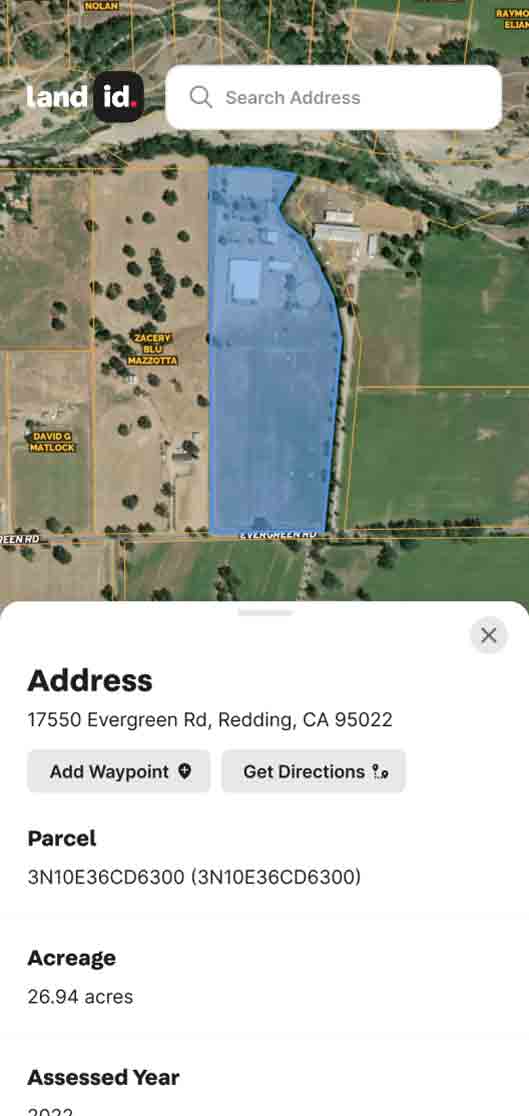
The core mechanic is simple: find properties where the owner's mailing address differs from the property address. You can do this manually through county records, but it's slow and tedious. Use Land id instead to filter by owner location in seconds. You can then filter your exported mailing list to sharpen your targeting, looking for:
- Out-of-state owners—distance increases motivation
- Long-term ownership (10+ years)—more equity, more life changes, more reason to sell
- No mortgage on file—once you've identified promising leads, cross-check with the parcel data in Land id for mortgage status. Free-and-clear owners have flexibility that encumbered owners don't
The more criteria you layer, the smaller your list gets. That's the point. You're not looking for volume—you're looking for the right conversations.
Related: Absentee Owner Lists: What They Are, Why They Convert & How to Get Them
2. Data-Driven Driving for Dollars (the Modern Method)

“Driving for dollars” is one of the oldest prospecting tactics in real estate: cruise neighborhoods looking for signs of distress—overgrown lawns, boarded windows, deferred maintenance, vacant properties—and note the addresses for follow-up.
It works. But done the old way, it's a grind. You can spend a full afternoon driving and come home with a handful of addresses you still have to research.
The smarter version flips the sequence. Use comparable sales reports and mailing lists to pre-qualify neighborhoods before you drive. Filter by vacancy indicators, ownership length, or property condition signals, then focus your time on the blocks where the data already suggests opportunity.
You'll cover more ground, find better leads, and walk away with owner contact information already in hand.
3. Pre-Foreclosure & Distressed Property Data
Owners in financial distress often want to sell quietly. A public foreclosure is slow, stressful, and damaging. If you can reach them before the process escalates, you can offer a better path—and position yourself as the agent who helped them solve a hard problem.
The key records to track:
- Lis pendens—the first public notice that a foreclosure lawsuit has been filed
- Notice of Default (NOD)—signals a borrower is behind on payments
- Tax liens and delinquent property taxes—often an early indicator of financial stress
These records are public, but require courthouse visits and spreadsheet work. One thing worth saying plainly: Distressed sellers are people in hard situations. The agents who do this well lead with empathy, not urgency.
4. Expired & Withdrawn Listings
When a listing expires or gets pulled from the MLS, the owner still has a property they wanted to sell. They just didn't sell it. According to Redfin, about 1 in 5 homes that are delisted are relisted. That gap between intention and outcome is your opening.
Timing matters. Reach out too soon, and you're one of 20 agents calling the same day the listing expires. Wait too long and they've either relisted or decided to hold. The sweet spot is usually 2–4 weeks after expiration—the initial wave of calls has died down, but the seller is still motivated.
Don’t show up with a generic “I’d love to list your home” pitch. Show up with a point of view. Why didn’t it sell? Was it priced wrong? Marketed poorly? Shown badly? Bring a specific answer and a specific plan.
5. Probate & Estate Sales
When a property owner passes away, heirs often inherit real estate they have no interest in keeping. They're not investors. They're not looking for top dollar. They want the process to be simple, fast, and handled by someone they can trust.
Probate sales are a consistent source of off-market inventory—and one of the more underutilized strategies for agents who aren't already working this niche.
You can find probate leads through:
- Court records—probate filings are public documents
- Relationships with estate attorneys—they're frequently asked for agent referrals
- Parcel data—filter for recent deed transfers to trusts or estates, which often signal a probate situation in progress
As with distressed sellers, the tone matters. These are families navigating loss. Your value is making a complicated process feel manageable.
6. Direct Mail to Targeted Lists
Direct mail still works. What doesn't work is the generic approach to direct mail.
The difference between a 0.5% response rate and a 3% response rate almost always comes down to targeting. A letter sent to all homeowners in a given ZIP code is easy to ignore. A letter complete with a printed Land id map of the property, sent to absentee owners of single-family homes in a specific neighborhood with 15+ years of ownership and no mortgage, feels more relevant—because it is. With Land id mailing lists, it’s possible to do this at scale (and Mapping Services can help).
Smaller, better-qualified lists outperform larger generic ones. Spend your mail budget on high-probability leads, not volume. And remember: Direct mail is rarely a one-touch game. Plan for 5–7 contacts over 60–90 days before you judge whether it's working.
7. Networking
Build relationships with estate attorneys, CPAs, property managers, divorce attorneys, and contractors—people who hear about life changes before they ever hit public records.
The best referral networks aren't built by handing out business cards. They're built by being the person who makes other people's jobs easier.
8. Land id Parcel Data: Modern Off-Market Prospecting

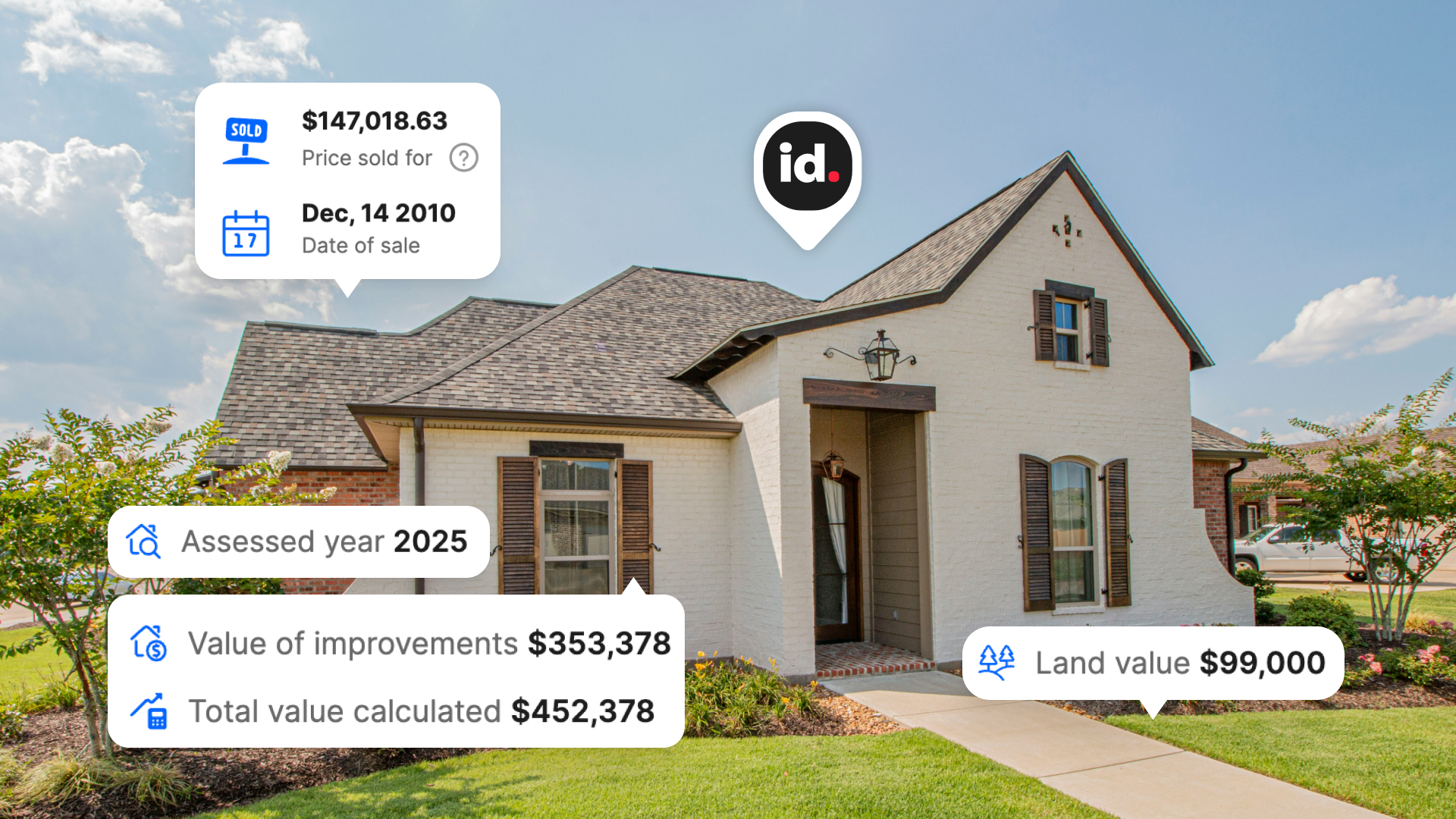
Every strategy above gets meaningfully easier with access to comprehensive parcel data: ownership records, transaction history, mortgage data, land use, acreage, land use, and more.
Land id pulls public records from county assessors, recorders, and other sources into a single searchable database. Instead of visiting five different county websites and stitching together spreadsheets, you search once.
This is where the efficiency adds up. You’ll cut hours and days out of research. And the targeting precision you get from layering filters is simply not possible when you're working from county records manually.
How to Qualify Off-Market Leads Before You Reach Out
Not every off-market property is worth your time. Before you invest in outreach, look for signals that suggest the owner has a reason to sell.
Ownership length. Owners who have held a property for 10+ years often have more equity and more time for life circumstances to shift: retirement, relocation, family changes, or a property that no longer fits.
Absentee status. Owners who don't live at the property are paying carrying costs without the benefit of occupancy. That friction adds up.
Mortgage position. Free-and-clear owners have flexibility. They're not underwater, and they don't need to hit a specific number to pay off a loan. High-LTV owners in distressed situations can also be motivated (but those transactions can be more complicated).
Property condition signals. Vacancy indicators, code violations, and deferred maintenance suggest an owner who may be checked out—and ready to move on.
Recent life events. Probate filings, divorce records, and similar events often trigger sales. These situations require care. Your goal is to be useful, not opportunistic.
Here's the rule: signals stack. One indicator is interesting. Three or four on the same property means you've found a lead worth prioritizing.
How Land id Owner Mailing Lists Help You Find Off-Market Deals Faster
Land id was built for exactly this kind of research. Instead of toggling between county websites, spreadsheets, and third-party list providers, you can search, filter, and export targeted lead lists from a single platform.
Filter and export owner mailing lists by specific criteria, including acreage, assessed value, sale date, and land use. You can also export custom lists by request. Export to CSV for direct mail campaigns, skip tracing, or CRM import.
That's the modern approach to off-market prospecting: data-driven targeting that respects your time and improves your odds.
Learn More About Land id Owner Mailing Lists →
Common Mistakes When Prospecting Off-Market Properties
Good strategies fail when execution is sloppy. Here's what to watch for.
Casting too wide a net. Big lists feel productive. They usually aren’t. A list of 10,000 random homeowners will often underperform a list of 200 well-qualified leads.
Ignoring data hygiene. Outdated addresses, deceased owners, and incorrect property details waste budget and damage credibility. Verify key details before high-touch outreach like calls or door-knocking.
Treating every lead the same. A cold absentee owner and a family navigating probate require completely different approaches. Distressed sellers, estate situations, and pre-foreclosure leads need empathy first.
Giving up after one touch. Most off-market deals don't happen on the first contact. Sellers need time to decide. A consistent follow-up sequence keeps you top of mind without being obnoxious.
Relying on a single channel. Direct mail plus door knocking plus networking creates multiple touchpoints—and increases the odds that you reach a seller at exactly the right moment.
You're Now an Off-Market Expert
Off-market prospecting works best when you stop chasing every property and start prioritizing owners with real motivation signals.
Start with one strategy. Build a targeted list. Send the first mailer. Knock the first door. The goal isn't to have a perfect system on day one—it's to start gathering data on what works in your market, with your clients, in your price range.
This is Part Two in our prospecting series. Catch up with Part One, Prospecting for Seller Leads.
FAQs
See Land id In Action
Research, analyze, share, and showcase real estate, all in one place.

Continue Reading
Craig Rowe
Real Estate’s Super El Niño Problem


By Land id
Just some rain...or real estate catastrophe? With months before winter hits, some states are already feeling the effects of this year's so-called Super El Niño. Here's how agents can help their clients.

Craig Rowe
How to Work With Out-Of-State Buyers: Tips for Real Estate Agents
By Land id
Agents in emerging markets will benefit from an influx of aspiring buyers. Get tips on how to make the most of these potentially lucrative leads.


Explore Private Parcel Data & Property Boundaries
Download the Land id app and try for free.